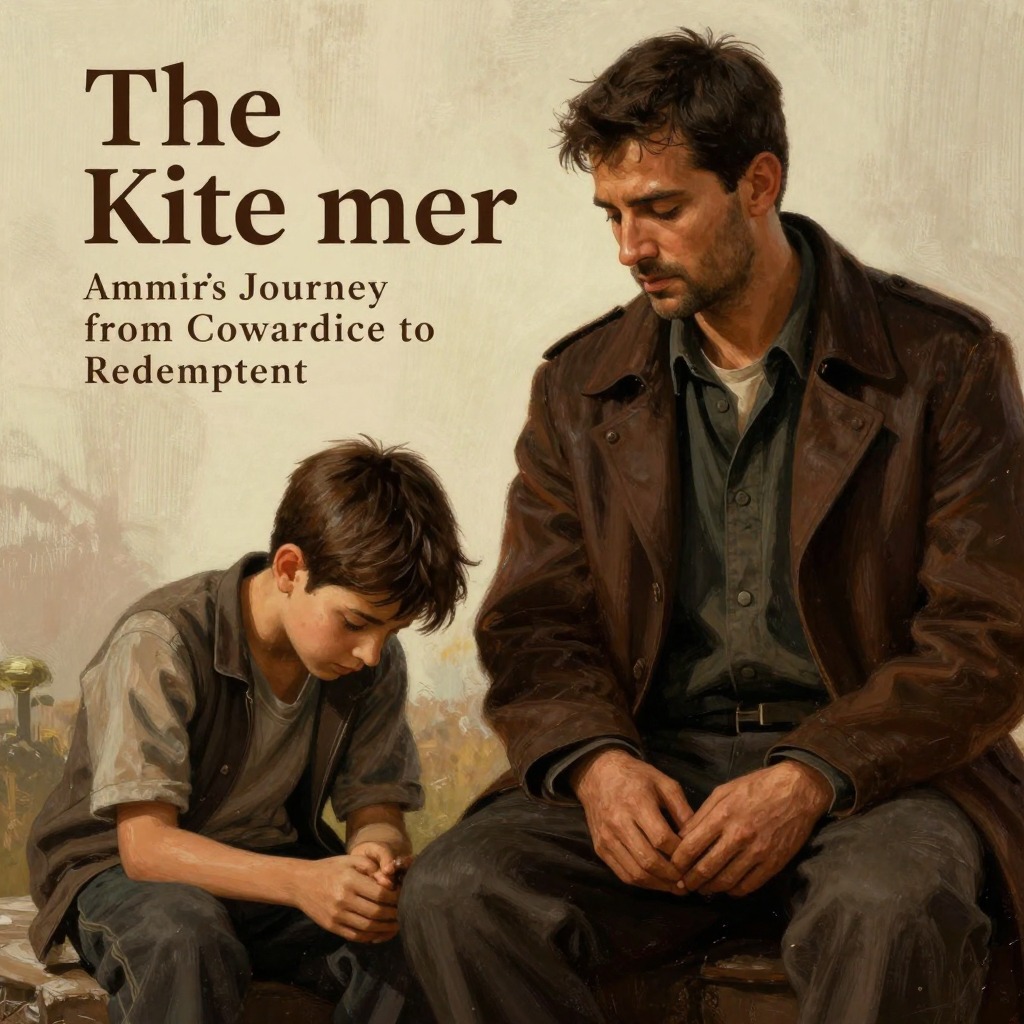
Kite Runner
The Kite RunnerThe kite runner is a figure central to the winter kite-fighting tradition in Kabul, a role that combines athleticism, intuition, and unwavering loyalty. In the novel, the kite runner is not merely a spectator or a retriever of fallen kites; he is an integral part of the tournament's drama and a symbol of devotion. The most famous kite runner in the story is Hassan, whose skill and dedication elevate the role to an art form. His defining act—running the last fallen kite of the 1975 tournament for Amir—becomes a touchstone for the novel's exploration of guilt, betrayal, and the possibility of atonement.
The Role and Its Cultural Context
Kite running is an old winter tradition in Afghanistan, particularly in Kabul, where the kite-fighting tournament is the highlight of the cold season. When a kite is cut from the sky, the real fun begins: hordes of kite runners swarm the streets, chasing the windblown kite as it drifts through neighborhoods, fields, and rooftops. The chase is fierce, with boys shoving past each other like "those people from Spain I'd read about once, the ones who ran from the bulls." The most coveted prize is the last fallen kite of the tournament, a trophy of honor displayed on a mantle for guests to admire. When the final kite is cut, "all hell broke loose." The kite runner's role is thus one of high stakes and intense competition, requiring speed, endurance, and an almost preternatural ability to predict where the kite will land.
Hassan's Mastery and Intuition
Hassan is by far the greatest kite runner Amir has ever seen. His ability is "downright eerie": he always reaches the spot where the kite will land before the kite itself arrives, as if he has "some sort of inner compass." On one overcast winter day, Amir chases Hassan through neighborhoods, hopping gutters and weaving through narrow streets, but falls behind. Hassan, without even looking at the sky, leads them to a rutted dirt road near Isteqial Middle School, where he sits cross-legged at the foot of a sour cherry tree, eating dried mulberries. When Amir protests that they are going the wrong way, Hassan simply says, "It's coming." Moments later, the kite plummets directly into his outstretched arms. This uncanny skill is not just physical; it reflects a deep, intuitive bond with the wind and the kite's trajectory, a knowledge that seems almost spiritual.
The Kite Runner as a Symbol of Loyalty and Sacrifice
Hassan's identity as a kite runner is inseparable from his loyalty to Amir. After Amir wins the 1975 tournament, Hassan promises to run the last blue kite for him, shouting over his shoulder, "For you, a thousand times over!" This phrase becomes the novel's most resonant expression of unconditional devotion. When Hassan retrieves the kite, he is cornered in an alley by Assef and his friends, who demand the kite. Despite the threat of violence, Hassan refuses to surrender it, saying, "Amir agha won the tournament and I ran this kite for him. I ran it fairly. This is his kite." He endures a brutal sexual assault rather than give up the kite, a sacrifice that haunts Amir for decades. The kite thus becomes a symbol of both Hassan's loyalty and Amir's cowardice, a physical object that carries the weight of betrayal.
The Kite Runner's Legacy and Redemption
Years later, the kite runner's role is revived in a moment of tentative healing. In March 2002, at a gathering of Afghans in Fremont's Lake Elizabeth Park, Amir buys a yellow kite and flies it with Sohrab, Hassan's orphaned son. Sohrab, who has been silent and withdrawn since his suicide attempt, takes the string and watches as Amir executes the old "lift-and-dive" trick, cutting a green kite from the sky. When Amir asks if Sohrab wants him to run the fallen kite, Sohrab nods. Amir turns and runs, shouting, "For you, a thousand times over." This act reenacts Hassan's defining moment, but now it is Amir who runs, seeking to atone for his past failure. The kite runner, once a symbol of Hassan's sacrifice, becomes a vehicle for Amir's redemption and a fragile bridge to Sohrab's recovery. The novel ends with Amir running with a swarm of children, a smile on his face, having witnessed the first flake of snow melting in Sohrab's lopsided smile.
The novel's immense commercial success began with over 70,000 hardback and 1.25 million paperback copies sold in its first two years, but its popularity truly surged in 2004 when the paperback edition was released and book clubs embraced it. It became a New York Times bestseller in March 2005 and remained on the list for two years; by 2013, over seven million copies had been sold in the United States. The book received the South African Boeke Prize in 2004 and was voted the Reading Group Book of the Year for 2006 and 2007. Critics praised it as "beautifully written, startling and heart wrenching" (Salon) and "shattering" yet "inspiring" (The Observer). However, the novel also attracted controversy: the American Library Association listed it among the most-challenged books of 2008 due to offensive language and sexual content, and it was frequently banned from school libraries in multiple states through 2024. Afghan American readers criticized its portrayal of Pashtuns as oppressors and Hazaras as the oppressed, with some arguing it oversimplified ethnic relations. Hosseini defended his work by stating he wrote about truths that some found embarrassing, while others noted that his Tajik upbringing might have influenced a less nuanced view of Afghanistan.